

Make a Flat Shape Look Solid With Values (4 of 8 Grayscale)
Nov 14, 2026
A box can look flat even when you’ve drawn the corners in the right places. A ball can look like a circle even when the outline is dead on. Before you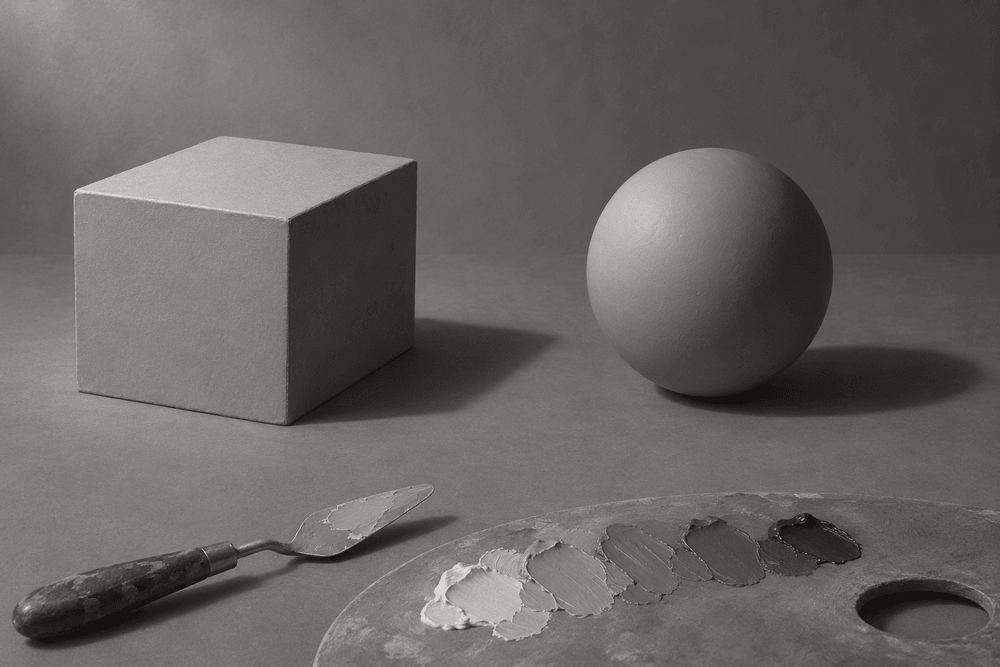 redraw either one, check what happens to the gray inside the outline. Can you see where the box changes direction? Can you follow the light as it turns around the ball?
In Part 3, we compared a white cup and a dark cup under one lamp. This time, use a box and a ball close in surface value so you can pay attention to the shape of each one. Evolve Artist starts in grayscale and uses changes in value to show how light describes form (Evolve Artist, n.d.-a, n.d.-b). You can see those changes for yourself with a small box, a matte ball, and a lamp.
Set Up Where You Can See Three Faces
Put the box on a plain tabletop and turn it until you can see the top and two sides. Set the lamp a little above the table and off to one side. Move it until you can see a difference between the three faces from where you’ll paint. Mark the box position with a piece of tape if you tend to move things around. Set the ball aside for now.
Use a small panel prepared for oils and leave half of it free for the ball. Mix a few grays from black and white oil paint or bring back the four base values from Part 2. Put a small stroke of each next to the others on a scrap. The first thing you need is enough difference between the grays to see them from a few steps back.
Paint the Box One Face at a Time
Sketch the outside shape and mark the corners where the faces meet. Squint and pick the darkest face you can see. Fill it with a single gray. Then compare the two remaining faces directly. In your setup the top might be the lightest and the front a step darker. Lay in those two grays and leave the corner where they meet visible.
If the front and top look like one big area, check their values before tracing the corner with a darker line. Put a small test stroke on one face and step back. Can you see the corner now? Once the faces read, lay in the cast shadow where it starts at the base and follows the table. Check its direction against the setup before you put the brush down.
Give the Ball Room to Turn
Put the ball where the box was and keep the lamp where it is. Block in the tabletop and cast shadow on the other half of the panel. On the ball itself, mark the broad light and shadow shapes with two grays. Look for where the lit side starts turning away from the lamp. If your shadow looks like a thin stripe around the outside, look again at how far it comes across the ball.
Now compare the two light grays. If they make a jump where you see a gradual turn, pull a little from each pile and mix a gray between them. Lay it along the turn and keep some of both original values visible. You can do the same between the darker light and the lighter shadow where you see a gradual change. Use a narrow band there so the light and shadow groups still read from across the room.
If one part of the shadow jumps from light gray to dark, try an intermediate gray mixed from your two shadow piles. You can have seven piles available this way and use only the transitions you see. If the ball starts to look like it has stripes, check the width and placement of each transition before blending. Work the join you want to soften with a clean brush. Leave the broad lights and darks alone while you judge it.
Compare the Two Studies
In my painting Dolphins and Cubes, start with the light face of the top cube and move your eye across to its dark face. Then follow the upper dolphin from the lighter back down toward the darker underside. The cube changes value at the corner. On the dolphin, you can follow the change across the body.
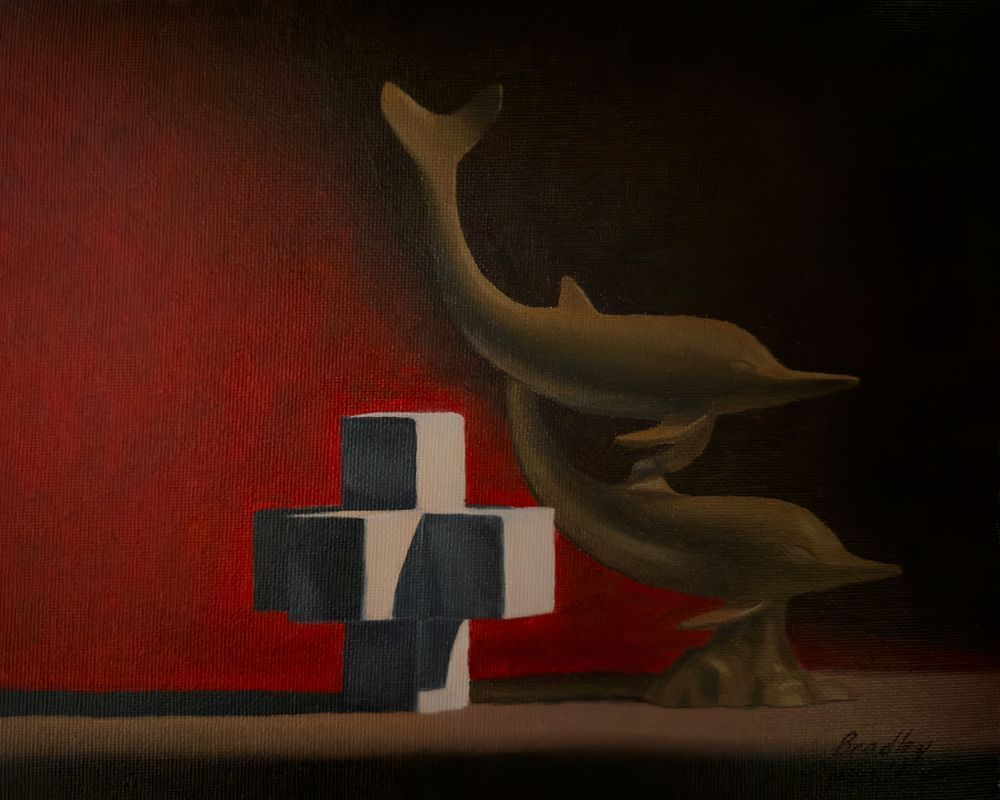
Step back from your panel and see whether the two forms are still readable. If the box looks rounded, check whether you blended across one of its corners. If the ball looks cut from cardboard, see whether one hard band is stopping the turn. Make one correction and compare again.
Browse my Realism collection and see where you can find the same kind of turn on a different subject. In Part 5, we’ll look at the light you can sometimes see inside a shadow and how to paint it without breaking up the shadow shape.
References
Evolve Artist. (n.d.-a). How to paint values: The 1st fundamental of art. https://evolveartist.com/blog/how-to-paint-values/
Evolve Artist. (n.d.-b). Our curriculum. https://evolveartist.com/curriculum