How to Find Painting References and Check Their Sources
Nov 05, 2026
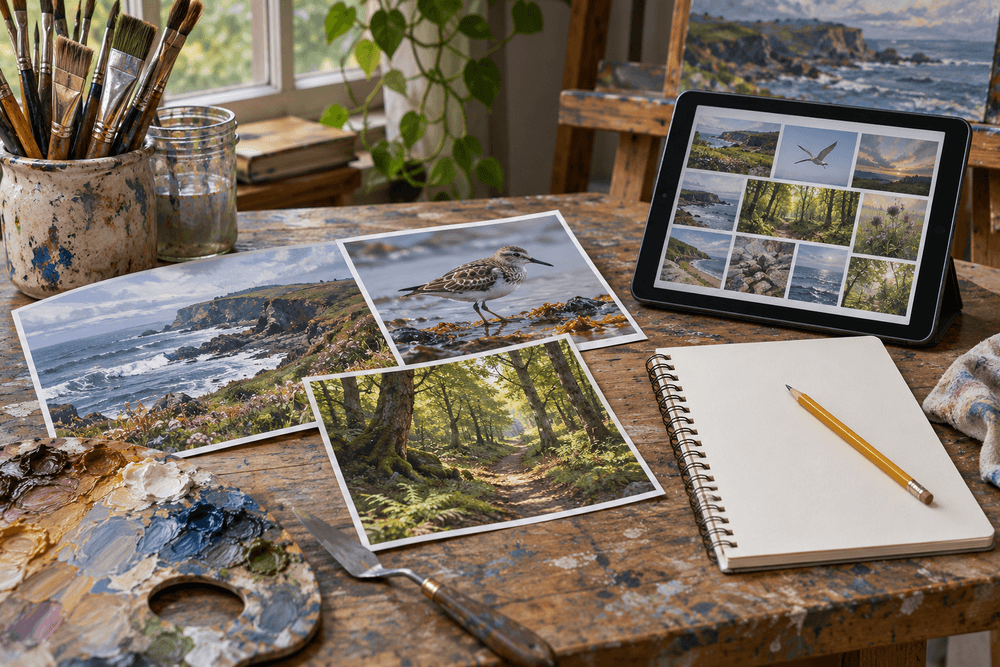 Finding a painting reference can take longer than you expected. You start with an idea for an animal, a landscape, or a portrait, then spend the afternoon sorting through photographs instead of painting.
I created the Artist Reference Library because I wanted a better starting point. Like Artist Exhibition Watch, it grew from frustration with searching through scattered information and trying to decide which sources deserved a closer look.
There is a fee to purchase the library. It is a research resource for artists, with current pricing and edition details on the product page.
Know What You Need Before Searching
Start with the painting you want to make. Are you looking for a particular light direction, a clear view of an animal, or a landscape with useful foreground shapes?
A beautiful photograph isn’t always a useful painting reference. You might like the subject but find the shadows too dark to understand or the image too small to study.
Write down two or three things you need. This gives you something to judge the reference against instead of collecting pictures without deciding how you’ll use them.
For a bird painting, for example, you may need a clear pose and enough detail around the feet and wings.
Look at the reference before committing to it. Can you understand the main shapes without guessing? Does the light help explain the subject? You don’t need to copy every detail in a photograph, but you do need enough information to make your own decisions. A clear reference gives you room to concentrate on the painting instead of filling important gaps.
Find the Original Source
A picture appearing in a search result doesn’t tell you everything about it. Follow the link and look for the photographer, collection, museum, archive, or other original source.
Check the individual image record when one is available. Don’t rely only on a caption someone else added while sharing the picture.
If you can’t identify the source, keep looking. It’s easier to choose another reference early than spend hours painting and then realize you don’t know where the photograph came from.
Keep the source link with the image so you can return to it.
Check the Terms Before Painting
Downloading a photograph and having permission to use it are different things. Read the terms for the specific image and the use you have in mind.
A private practice study, a painting for sale, and an image used to advertise prints may need different consideration. Don’t assume permission for one covers everything.
Some sources have clear reuse information. Others have conditions or require you to contact the creator. If the terms are unclear, ask for permission or find a reference with better documentation.
The library purchase does not give you ownership of photographs linked inside it. You still need to check the applicable terms.
Think About Exhibition Requirements Too
This connects with the previous article about choosing exhibitions. Before entering a painting based on a reference photograph, read the competition’s rules about originality and reference material.
An organizer may have requirements beyond the permission attached to the photograph. Keep those questions separate when planning your entry.
You don’t want to finish a painting for a particular competition and then discover the reference doesn’t meet its requirements.
If an exhibition’s wording is unclear, contact the organizer before paying to submit. Save the response with your project notes so you can refer to it later.
What the Library Is For
The Artist Reference Library gives artists a starting point for researching reference sources. Use it to narrow your search and look into the information attached to material you might paint from.
There is a purchase fee because this is an organized research product. Check the listing for the current price and what the delivered edition includes.
It isn’t a promise every image on a linked website suits every project. It also doesn’t replace permission from a creator when permission is needed.
I want artists to spend less time starting their searches from scratch and more time making informed choices about their paintings.
Keep a Record With Your Painting
Before beginning, save the source URL, creator’s name when available, and the relevant permission or license information. Record when you checked it.
Add any required credit and written permission to the same folder. Keep your painting notes there too.
Try this with your next reference. Find one image suited to your idea, trace it to its source, and document the terms before making the first sketch.
Explore the Artist Reference Library for current purchase details. Together with Artist Exhibition Watch, it supports two decisions artists face: what to paint from and where to consider showing the finished work.
Written by Bradley Hamilton
Bradley Hamilton is a professional oil painter and U.S. Army veteran based in Monterey County, California. His work includes realism, palette knife painting, and mixed media abstract realism. He also creates products for artists through Halico Art, LLC. His latest product is Artist Saver™. Explore his paintings at Hamilton Paintings and learn more about Artist Saver™.